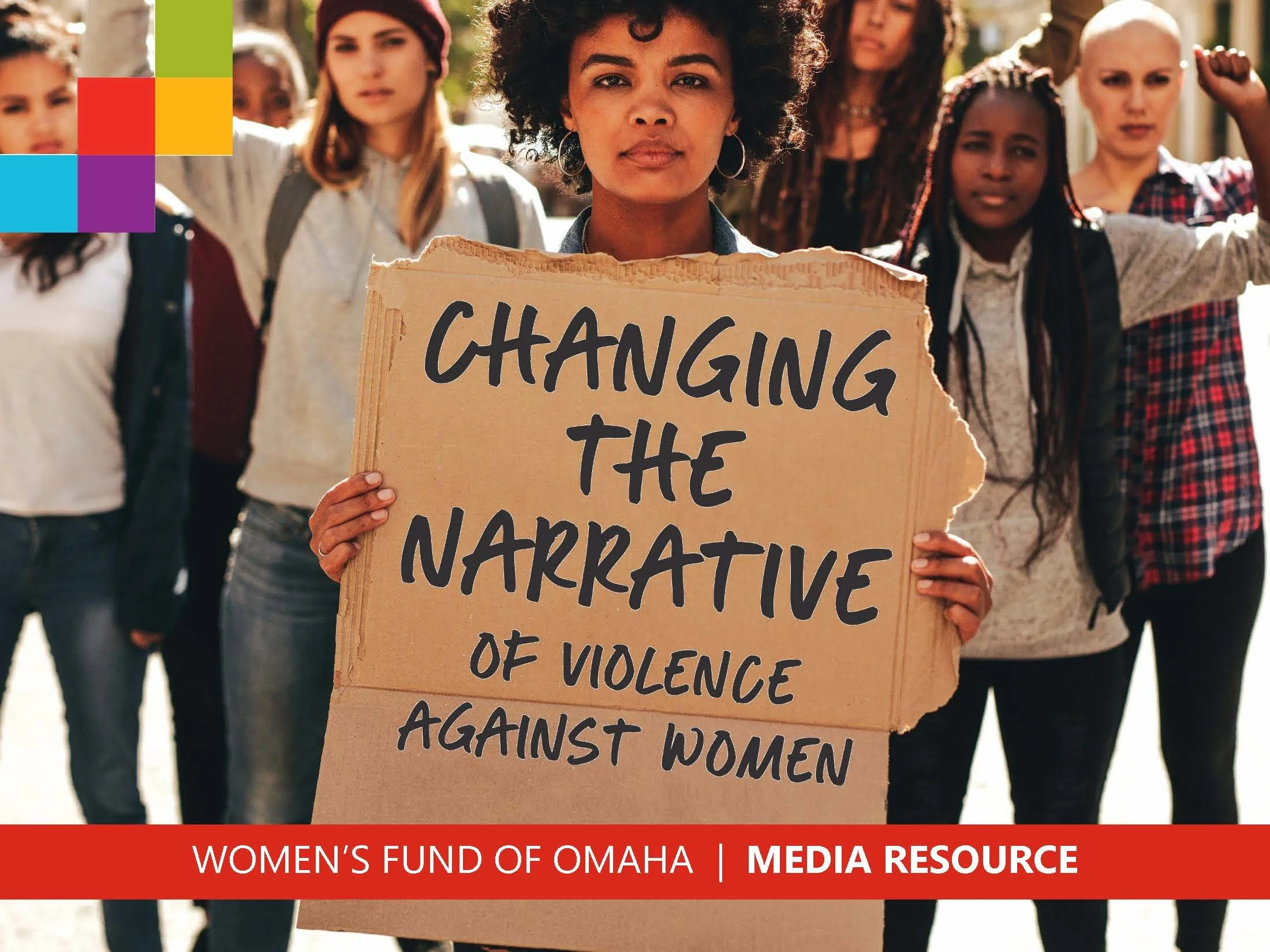
CHANGING THE NARRATIVE OF VIOLENCE AGAINST WOMEN Media Guide
A media guide for survivor allies in the journalism industry to shift the conversation around domestic violence, sexual assault and sex trafficking.
FOR: Women’s Fund of Omaha
ROLE: Concept, Creative Direction, Graphic Designer, Editor
AWARDS: Invited to present at the Women’s Funding Network International Conference in 2019
CHALLENGES
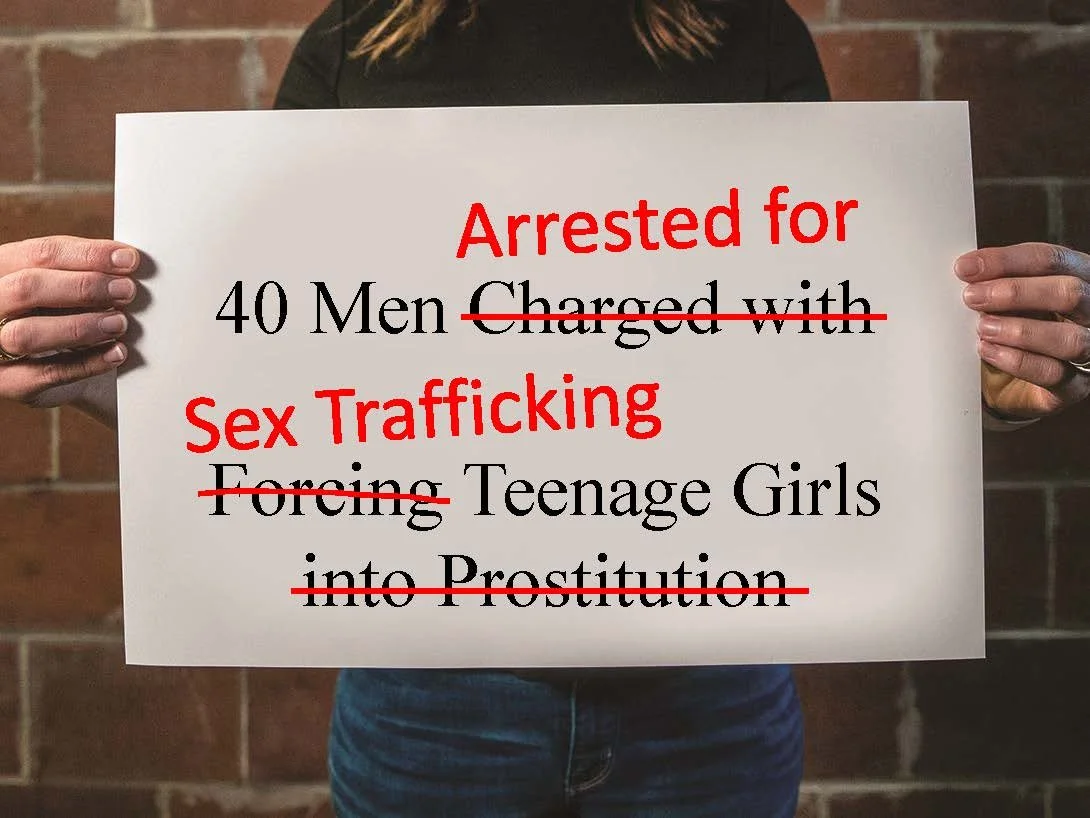
We consistently noticed that language being used in both local and national media was often perpetuating gender bias when reporting on gender-based violence.
INSIGHTS
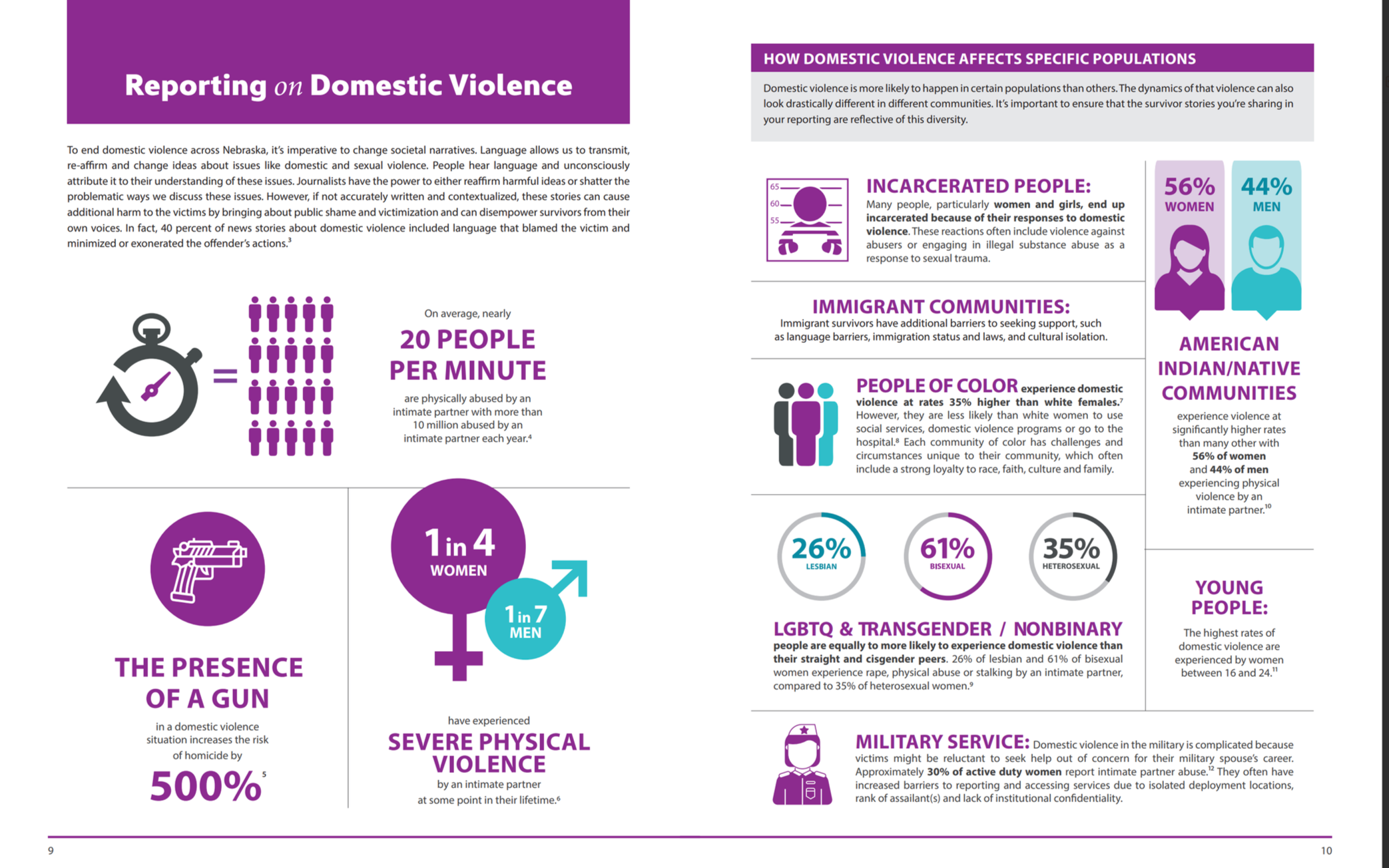
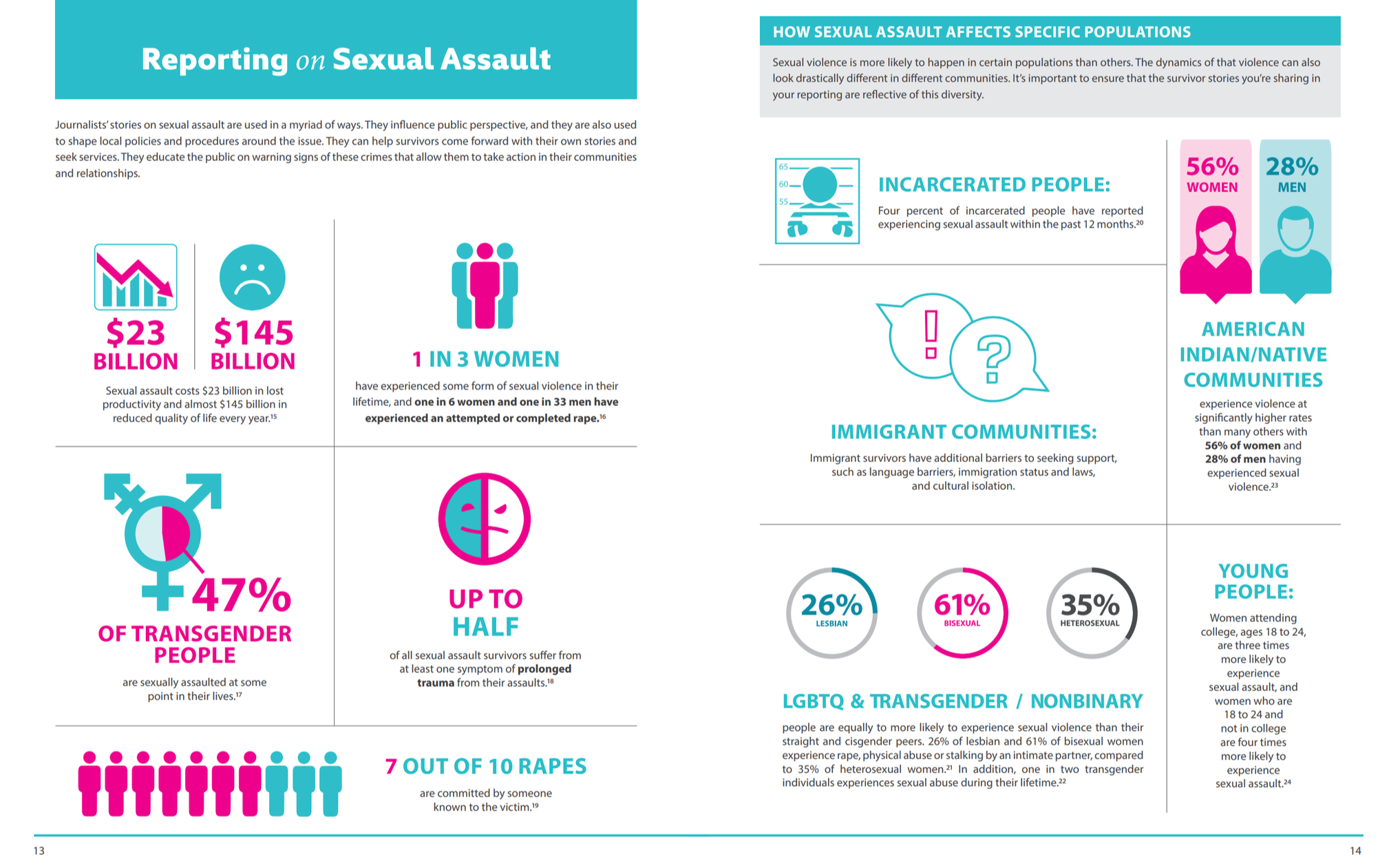
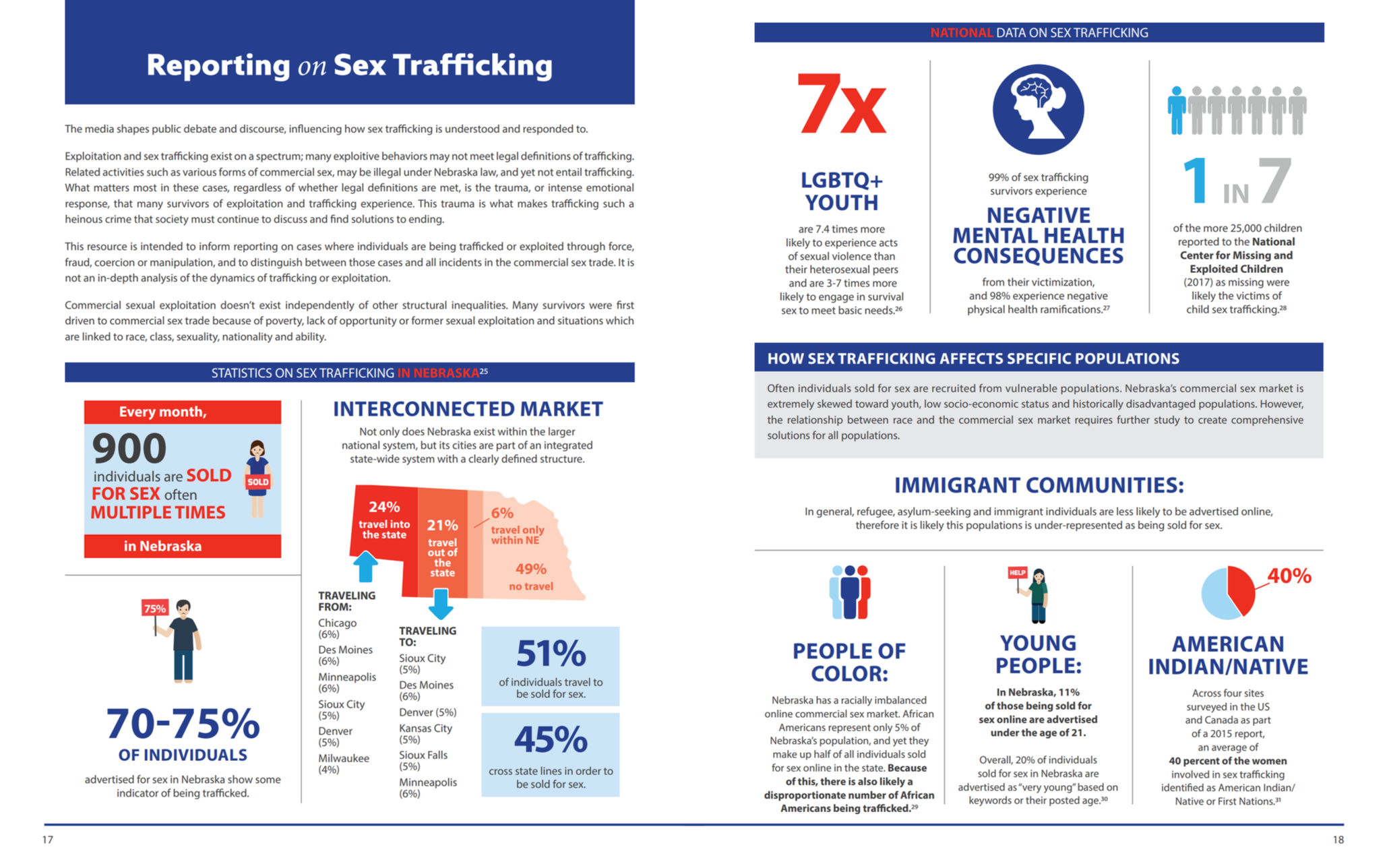
Sexual violence is happening in our community—1 in 4 women have experienced severe physical violence by an intimate partner, 1 in 3 women have experienced some form of sexual violence and 70-75% of individuals advertised for sex in Nebraska show some indicator of being trafficked. With those rates of occurrence, we know that media coverage of sexual violence is happening through local media almost daily.
With the increased attention on sexual violence, especially with the rise of the #MeToo Movement, the Women’s Fund public awareness team knew we needed to change how violence against women was being talked about in the local media. In reviewing what us already available, we reached out to the Maine Sexual Assault Coalition for permission to utilize their “Sex Trafficking & Exploitation Media Guide” as the starting point for our own guide.
We also talked with local survivors about their lived experiences in telling their stories, especially with media, on what has been triggering and re-traumatizing and what was helpful.
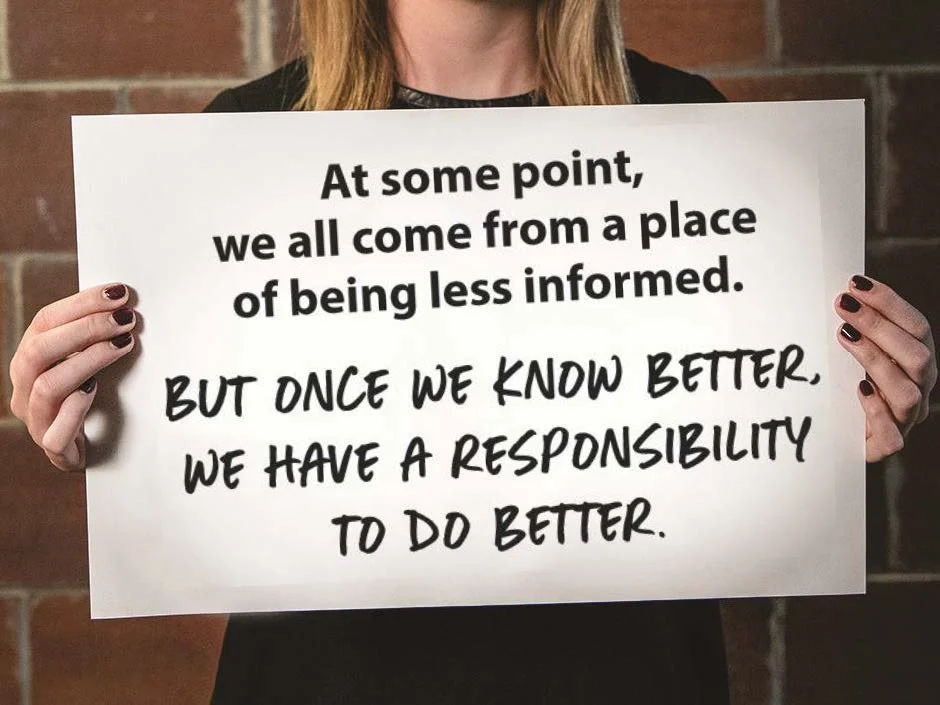
How we talk about gender-based violence shapes the way our community understands, responds and hopefully prevents these issues. In short, words matter. While we had been reacting to badly reported news articles, we needed to proactively change the conversation. We knew it would be critical to partner with our allies in the journalism industry to shift the conversation around domestic violence, sexual assault and sex trafficking. And we needed our partners in this work, other community organizations and advocates, to join us in changing this narrative.
To develop the resource, we looked at what else was out there and began tracking what stories were coming up the most that needed to be changed. We conducted information conversations with local survivors and also discussed what was needed in a resource with community partners who are direct service providers. All of this information helped to inform the work and drive the outline for the media resource.
We also engaged an outside consultant (a former news director turned public relations professional) to assess just how much news media would accept the resource as helpful and how it should be delivered to them knowing they have reduced newsrooms and limited time.
SOLUTIONS
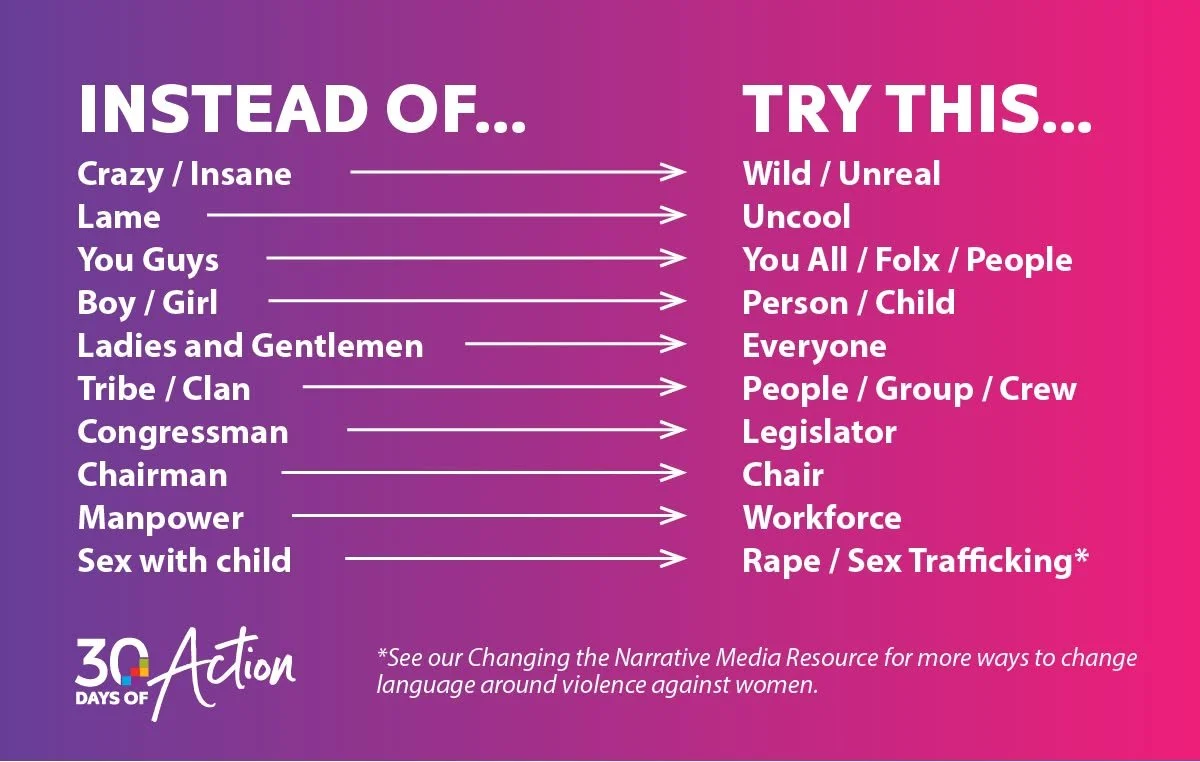
Guide Development. A centralized resource, “Changing the Narrative of Violence Against Women: A Media Resource” was created that featured guidelines for reporting on violence against women with the intention of providing clarity and support for journalists with the most up-to-date resources for readers and the greater Nebraska community. The resource included definitions (including legal definitions), statistics, ways journalists could help tell the story, language considerations, trauma-informed interviewing tips and a list of content experts.
Launch to Partners. Our community partners and advocates are critical in changing the narrative as they are working directly with survivors and also participating in media interviews. We introduced them to the guide first at a launch event in December 2018.
Meetings with Media. Journalists have the ability to shape public perception about the issues. The media plays a tremendous role in ending domestic violence and the resource was written as a toolkit to assist in that work. To build relationships, we decided to forgo structured trainings and instead had one-on-one conversations with media newsrooms across the community to talk about why this matters, what they could do to change the narrative and how we could support them to sharing stories that cover the complexities of violence against women.
Collaboration with Community Partners and Others.
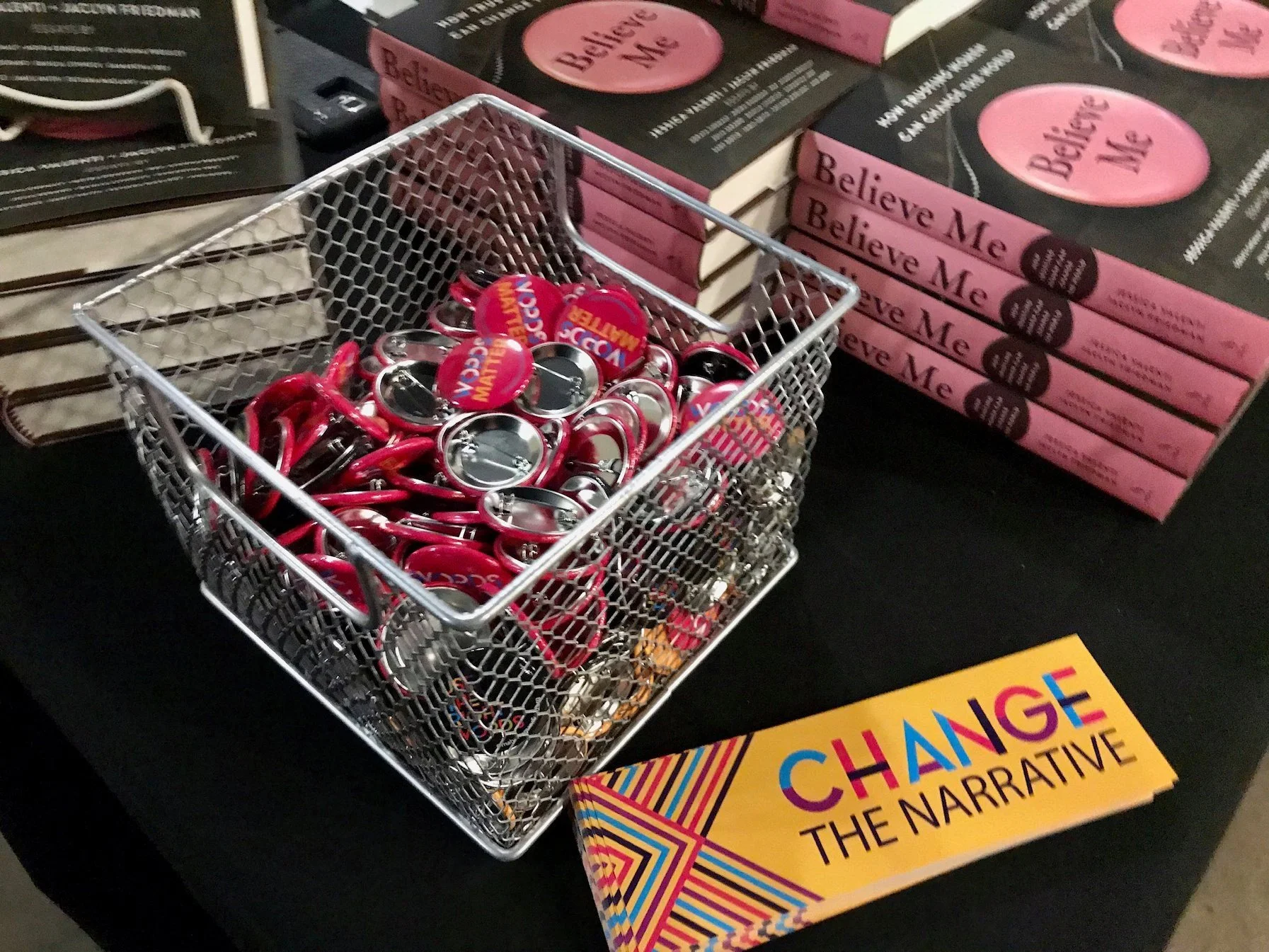
Amplification Work with Circles Group. Our women’s networking group, Circles, took on a special project to advance this work in the community and within their membership of 90 during 2019. Their “Words Matter” Circles Group was trained on the media resource, presented Words Matter Minutes at the start of each monthly meeting, which helped to raise awareness about the power of words and continued to challenge each other on how they use language to uplift rather than oppress. They also became an online army, quick to have the hard conversations online with people who were continuing to use words as a tool of oppression and holding local media accountable.
Professional Presentations. In addition to meetings with local media and conversations with partners, the Women’s Fund team had several opportunities to present and train on the media resource. One local training included the PRSA Nebraska Monthly Lunch in May 2019 as well as a breakout session at the Women’s Funding Network Summit in San Francisco in September 2019.
RESULTS
The “Changing the Narrative” Media Resource landing page has been viewed by 500 individuals since it was published in January 2019. Trainings has been provided to the Omaha World-Herald as well as two main TV channels and individual reporters at every TV station in the community. Additionally, more than 50 community partners, advocates and influencers have been trained on and provided the resource for their use.
The tone of news coverage has changed. Over the past year, we have even had news stations reach out to us to consult on the reporting of news stories to ensure they were “getting it right.” By building these relationships, we have opened up the conversation and received a change of coverage. News reports are no longer putting mugshots of potential victims of sexual violence in their reports. They are no longer repeatedly calling survivors to try to get them to retell their stories. They are finding new ways to report on this type of violence against women.